
- 27 Feb, 2026
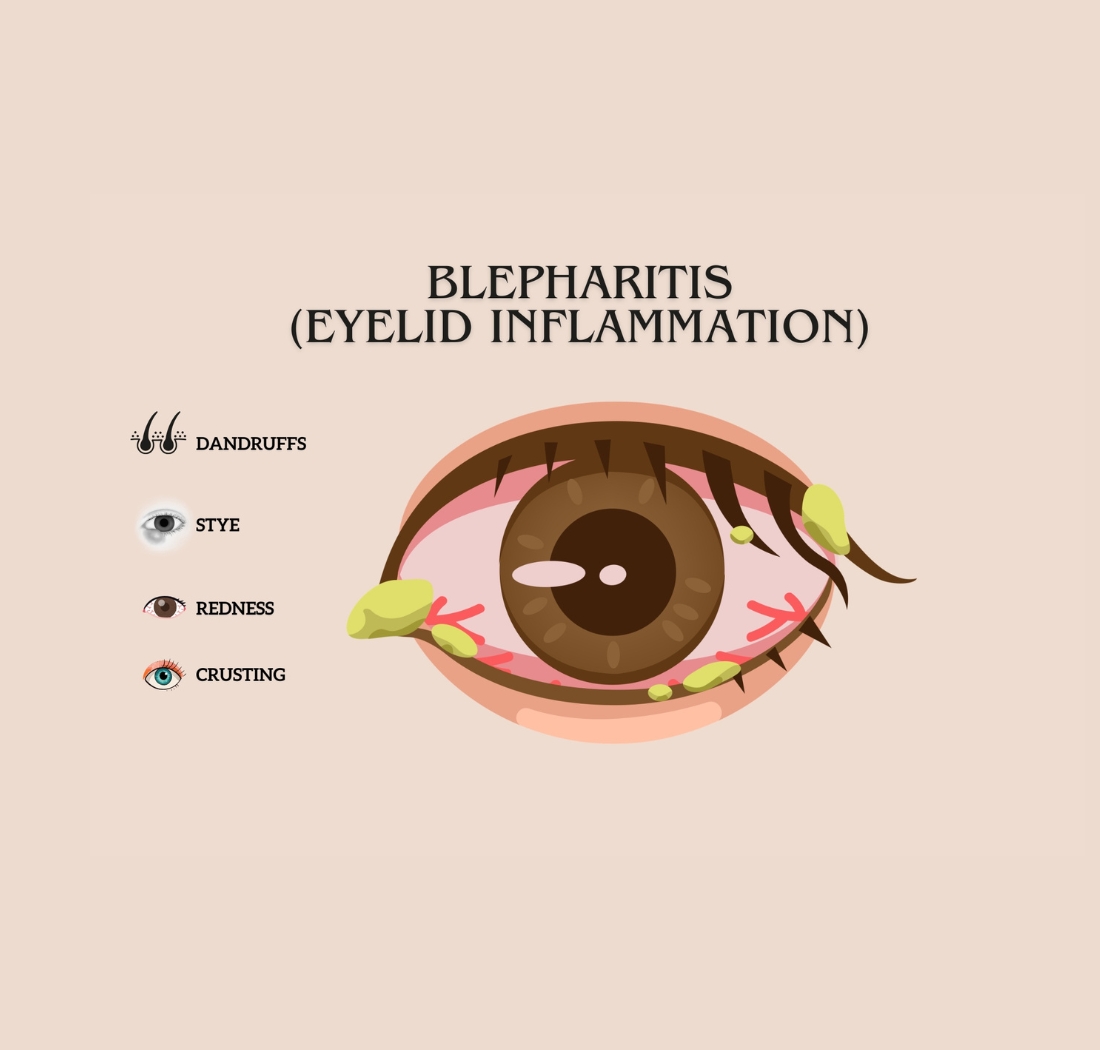
Blepharitis is a common eyelid disorder. It is a subacute or chronic inflammation of the eyelid margin that causes red, swollen, or itchy eyelids along with crusty, dandruff-like deposits on the eyelashes.
The eyelids are folds of skin that help protect the eyes from debris and injury. Blepharitis commonly occurs when the tiny oil glands located at the edges of the eyelids become clogged or irritated.
It is a very common condition that can occur at any age, but it is most often seen in children and adults over 50 years. It usually affects both eyes.
Although blepharitis can be uncomfortable and irritating, it is not contagious, and vision is rarely affected.
Depending on the location, there are two types:
Affects the outer eyelid margin, where the eyelashes are attached.
Affects the inner eyelid margin.
Caused by dysfunction of the meibomian glands.
It is the leading cause of evaporative dry eye.
Blepharitis often develops due to skin conditions, bacterial infection, or a combination of both.
The exact cause is often unknown, but it is commonly linked to excess bacteria at the base of the eyelashes.
Other contributing factors include:
Seborrheic dermatitis (dandruff of scalp or eyebrows)
Bacterial infection
Poor cosmetic hygiene
Exposure to pollutants or chemicals
Allergies (including reactions to eye medications or contact lens solutions)
Meibomian gland dysfunction
Rosacea (skin condition causing facial redness)
Dry eye disease
Blepharitis often presents with:
Yellow crusts along the eyelid margin
Redness and thickening of the lid margin (tylosis)
Mild conjunctival redness
Small ulcers that may bleed when crusts are removed
Itching and burning sensation in the eyelids
Foreign body sensation (especially in the morning)
Red and swollen eyelids
Chronic irritation
Madarosis (loss of eyelashes)
Light sensitivity (photophobia)
Watery eyes
Eyelids sticking together
Misdirected eyelashes
Flaky lashes
Frequent styes or chalazia
Possible complications include:
Stye (Hordeolum): Painful, red bump due to infection
Chalazion: Painless lump caused by gland blockage
Tear film instability
Corneal infection due to poor oil secretion
Difficulty wearing contact lenses
Secondary inflammation of conjunctiva, lacrimal glands, or cornea
Excessive tearing
Marginal keratitis
Tylosis (thickened eyelids)
Conjunctivitis (pink eye)
It is also important to distinguish blepharitis from sebaceous carcinoma, a rare cancer of the eyelid.
Treatment depends on severity. Mild cases can often be managed at home.
Avoid rubbing your eyes
Avoid eye makeup during active infection
Apply warm compresses to soften crusts
Maintain good eyelid hygiene
Clean eyelids gently using a cotton swab with clean water and diluted baby shampoo
If symptoms persist, consult an eye specialist. Treatment may include:
Antibiotic medication
Anti-inflammatory or steroid drops/ointments
To reduce the risk of blepharitis:
Remove eye makeup thoroughly before sleeping
Avoid expired cosmetic or eye products
Do not apply eyeliner along the inner eyelid margin
Maintain good eyelid hygiene
Avoid touching eyes with unclean hands
Use glasses instead of contact lenses during flare-ups
Foods That Help Strengthen Your EyesightMany people know that a balanced diet supports digestion and...
Glasses or Contact Lenses — Which Should You Choose?After visiting an eye clinic, you may...
Eye Twitching – Causes, Symptoms, and TreatmentMany cultures have different beliefs about eye twitching. Some...



Comments (0)