
- 27 Feb, 2026
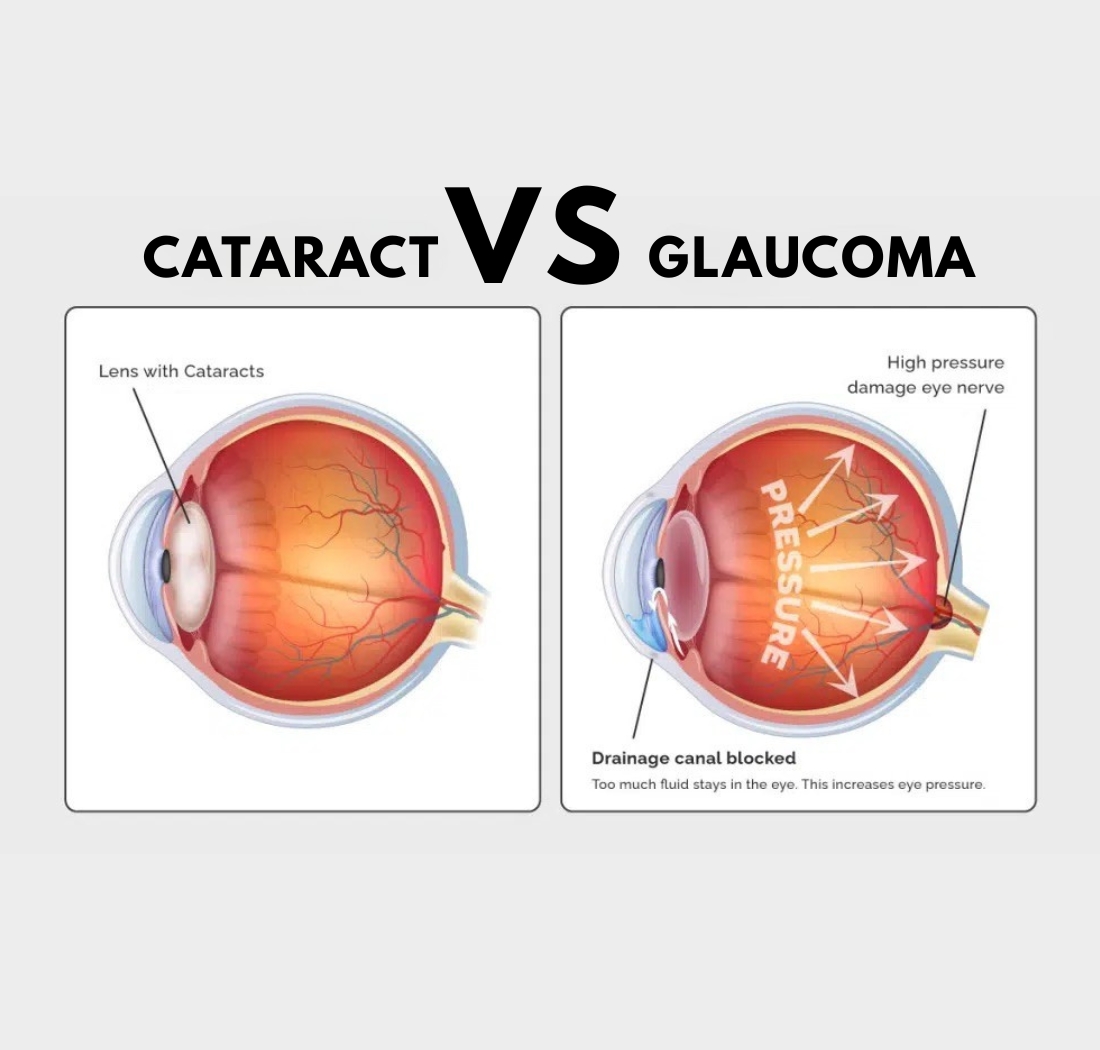
Cataract and glaucoma are both common age-related eye diseases, but they are not the same condition and are not directly related. However, both can threaten vision and may occur together, especially in people over 60 years of age.
Both conditions can cause vision loss, but there is an important difference:
Cataract vision loss is reversible with surgery.
Glaucoma vision loss is irreversible — treatment can only prevent further damage.
A cataract is a condition in which the eye’s natural lens becomes cloudy, preventing light from reaching the retina properly and causing blurred vision.
It is the leading reversible cause of blindness worldwide. Cataracts usually develop slowly and can interfere with daily activities if untreated.
Aging (most common cause)
Eye injury (trauma)
Long-term steroid use
Excessive UV exposure
Smoking and alcohol use
Diabetes
High myopia
Previous eye surgery
Obesity
Certain genetic or inflammatory eye conditions
Gradual, painless blurred vision
Glare sensitivity
Poor night vision
Frequent changes in glasses power
Double vision in one eye
Faded colors
Increasing nearsightedness in older adults
There is no medical cure for cataract. Surgery is the only treatment, where the cloudy lens is removed and replaced with an artificial lens. Vision is usually restored after surgery.
Glaucoma is a group of eye diseases that damage the optic nerve, often due to increased eye pressure. The optic nerve carries visual signals from the eye to the brain.
It is called the “silent thief of sight” because it usually develops slowly without early symptoms.
Glaucoma typically affects peripheral (side) vision first and can lead to permanent blindness if untreated.
Inside the eye, a fluid called aqueous humour maintains pressure. If this fluid does not drain properly, pressure builds up and damages the optic nerve.
However, glaucoma can sometimes occur even with normal eye pressure.
You are at higher risk if you:
Are over 40 years old
Have a family history of glaucoma
Have high eye pressure
Have diabetes or hypertension
Use steroids long-term
Have had eye injury or surgery
Have thin corneas
Are very nearsighted or farsighted
Symptoms depend on the type:
No early symptoms
Gradual loss of peripheral vision
Severe eye pain
Sudden blurred vision
Halos around lights
Eye redness
Nausea and vomiting
There is no cure for glaucoma. Treatment aims to prevent further vision loss and may include:
Eye drops
Oral medications
Laser treatment
Surgery
They are not directly associated, but they can influence each other in some situations:
Advanced cataracts can increase eye pressure, raising the risk of glaucoma because the thickened lens may block fluid drainage.
People with glaucoma are not automatically at risk of cataract, but cataracts may develop due to steroid use, inflammation, or trauma.
Cataract and glaucoma are both serious but different conditions:
Cataract → Reversible vision loss
Glaucoma → Permanent vision loss but preventable with early detection
Regular eye check-ups are essential for early diagnosis and protecting vision.
Foods That Help Strengthen Your EyesightMany people know that a balanced diet supports digestion and...
Glasses or Contact Lenses — Which Should You Choose?After visiting an eye clinic, you may...
Eye Twitching – Causes, Symptoms, and TreatmentMany cultures have different beliefs about eye twitching. Some...



Comments (0)