
- 28 Feb, 2026
Most people know that ultraviolet (UV) radiation can damage the skin, but many are unaware that it can also harm the eyes.
Sunlight is essential for life and supports our physical and mental health. However, excessive exposure to UV rays increases the risk of several eye diseases and can affect vision.
Ultraviolet (UV) rays are a form of electromagnetic radiation produced by the sun and some artificial sources such as welding machines and UV lamps.
Sunlight contains:
Visible light
Heat
UV radiation
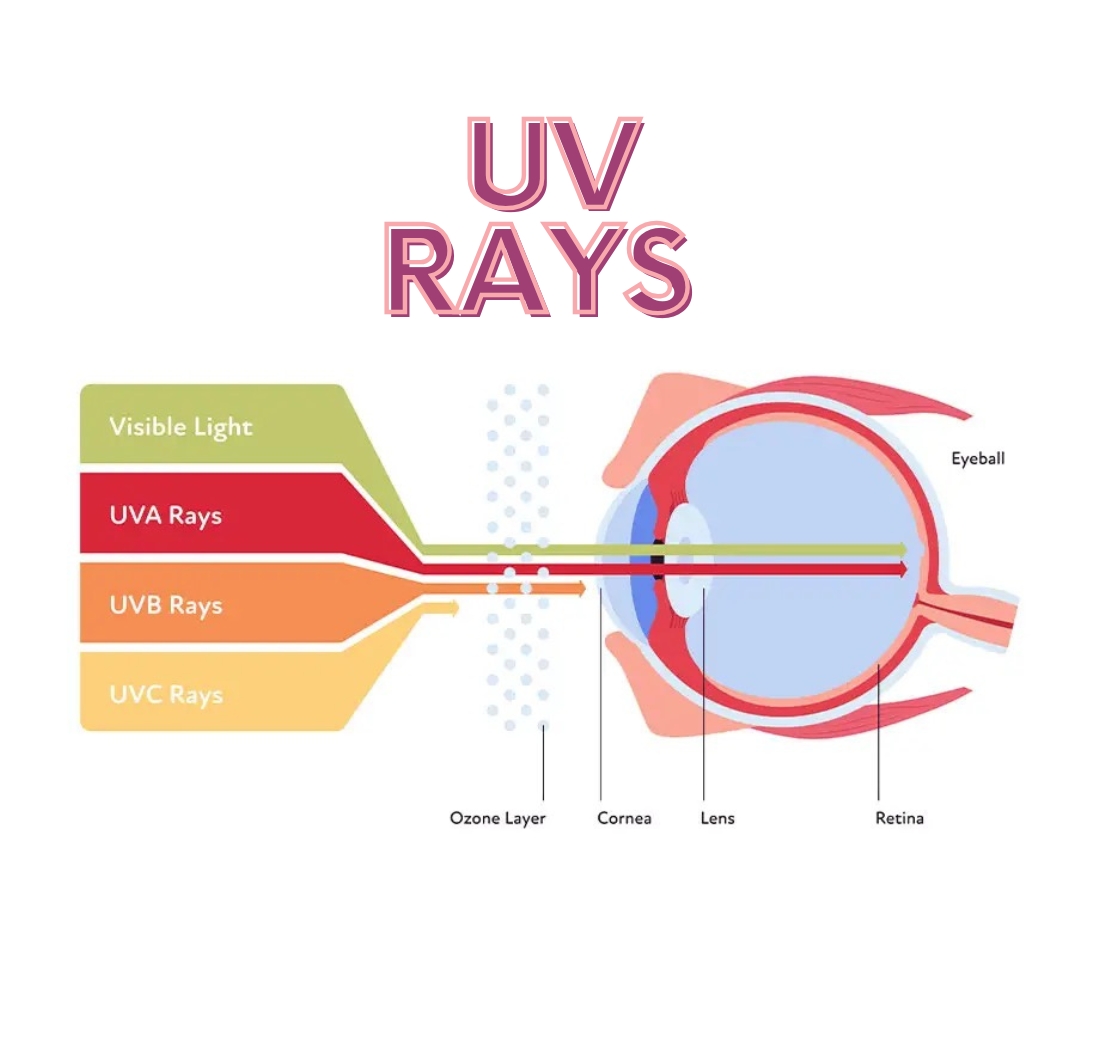
UV rays are invisible to the naked eye and have shorter wavelengths but higher energy than visible light.
There are three types of UV rays:
UV-C: Most harmful but completely absorbed by the ozone layer, so it does not reach the earth.
UV-B: Partially filtered by the ozone layer; mainly affects the cornea.
UV-A: Penetrates deeper into the eye and can reach the lens and retina, causing long-term damage.
Excessive UV exposure can cause both short-term and long-term eye problems.
A painful inflammation of the cornea caused by short-term UV-B exposure.
Symptoms:
Redness
Pain
Watering
Light sensitivity
Blurred vision
It is temporary but requires treatment.
Inflammation of the conjunctiva due to UV exposure.
It causes discomfort but usually does not affect vision.
A yellowish or whitish bump on the conjunctiva caused by long-term UV exposure, dust, and wind.
A fleshy growth on the conjunctiva that may extend onto the cornea and affect vision if untreated.
Long-term UV exposure increases the risk of cataracts (clouding of the eye lens), a leading cause of blindness worldwide.
Experts estimate that up to 20% of cataracts may be linked to UV exposure.
Chronic UV exposure can damage the retina and increase the risk of central vision loss.
Long-term UV exposure may lead to skin cancer, especially on the eyelids.
Anyone exposed to sunlight without protection is at risk, especially:
People working outdoors
Swimmers and beach visitors
Welders or workers exposed to artificial UV
Individuals using UV-emitting devices
People with prior eye surgery or retinal disease
Simple preventive measures include:
Wear sunglasses that block 99–100% UV rays
Use wide-brim hats outdoors
Choose wrap-around frames for better protection
Use UV-blocking contact lenses if needed
Limit direct sun exposure during peak hours
Ensure regular eye checkups
Protect children, as they spend more time outdoors
UV rays can seriously harm eye health over time. Proper awareness and simple protective measures can greatly reduce the risk of eye diseases.
Foods That Help Strengthen Your EyesightMany people know that a balanced diet supports digestion and...
Glasses or Contact Lenses — Which Should You Choose?After visiting an eye clinic, you may...
Eye Twitching – Causes, Symptoms, and TreatmentMany cultures have different beliefs about eye twitching. Some...



Comments (0)