
- 28 Feb, 2026
The conjunctiva is a thin, transparent tissue that lines the inside of the eyelids and covers the white part of the eye (sclera). It helps protect the eye by keeping the surface lubricated and preventing the entry of microorganisms.
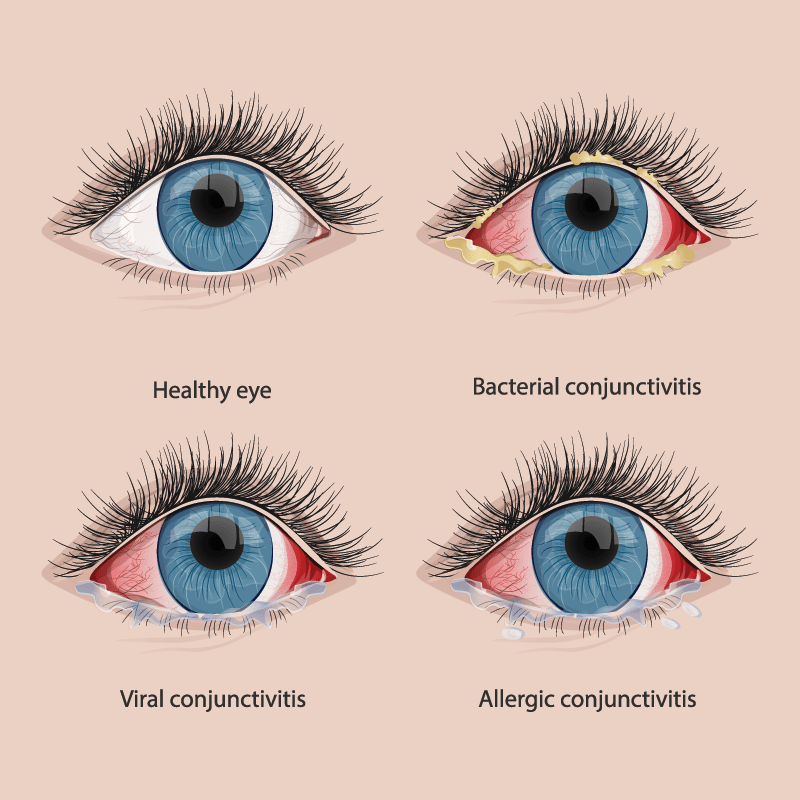
Conjunctivitis is the inflammation or infection of the conjunctiva. It occurs when the conjunctiva becomes irritated due to infection or allergies, causing the eyes to appear red and inflamed.
When the small blood vessels in the conjunctiva become swollen, they become more visible, giving the eye a pink or red appearance.
Conjunctivitis can affect one or both eyes. It is usually mild, but sometimes it can lead to complications. It rarely affects vision.
Some types are highly contagious and spread easily, especially among children, though teens and adults can also be affected.
Conjunctivitis is mainly classified into three types based on its cause:
Caused by bacteria. It is highly contagious and spreads through direct contact, poor hygiene, or contaminated items.
Caused by viruses linked to colds, flu, or respiratory infections. It spreads easily through coughing and sneezing.
Caused by allergic reactions to dust, smoke, pollen, cosmetics, or contact lenses. It is not contagious and is common in people with seasonal allergies.
In rare cases, conjunctivitis can also result from sexually transmitted infections, which require urgent treatment.
Symptoms vary depending on the cause but may include:
Red eyes
Gritty sensation
Itching or burning
Excess tearing
Eye discharge
Light sensitivity
Puffy eyelids
Often presents with thick yellow or green discharge.
Antibiotic eye drops or ointment
Usually improves within 1–2 weeks
Oral antibiotics may be needed in severe cases
A serious bacterial conjunctivitis in newborns, usually acquired during birth. It requires urgent treatment.
Commonly causes watery discharge, redness, and light sensitivity. It is very contagious.
No specific cure
Usually resolves on its own
Cold compress and lubrication drops help relieve symptoms
Main symptom is intense itching along with redness, tearing, and swelling.
Avoid allergens
Anti-allergy eye drops
Antihistamine medications if needed
To reduce transmission:
Wash hands frequently
Avoid touching your eyes
Use clean towels and pillow covers
Do not share personal items
Stop using contact lenses temporarily
Avoid swimming pools during infection
Foods That Help Strengthen Your EyesightMany people know that a balanced diet supports digestion and...
Glasses or Contact Lenses — Which Should You Choose?After visiting an eye clinic, you may...
Eye Twitching – Causes, Symptoms, and TreatmentMany cultures have different beliefs about eye twitching. Some...



Comments (0)