
- 27 Feb, 2026

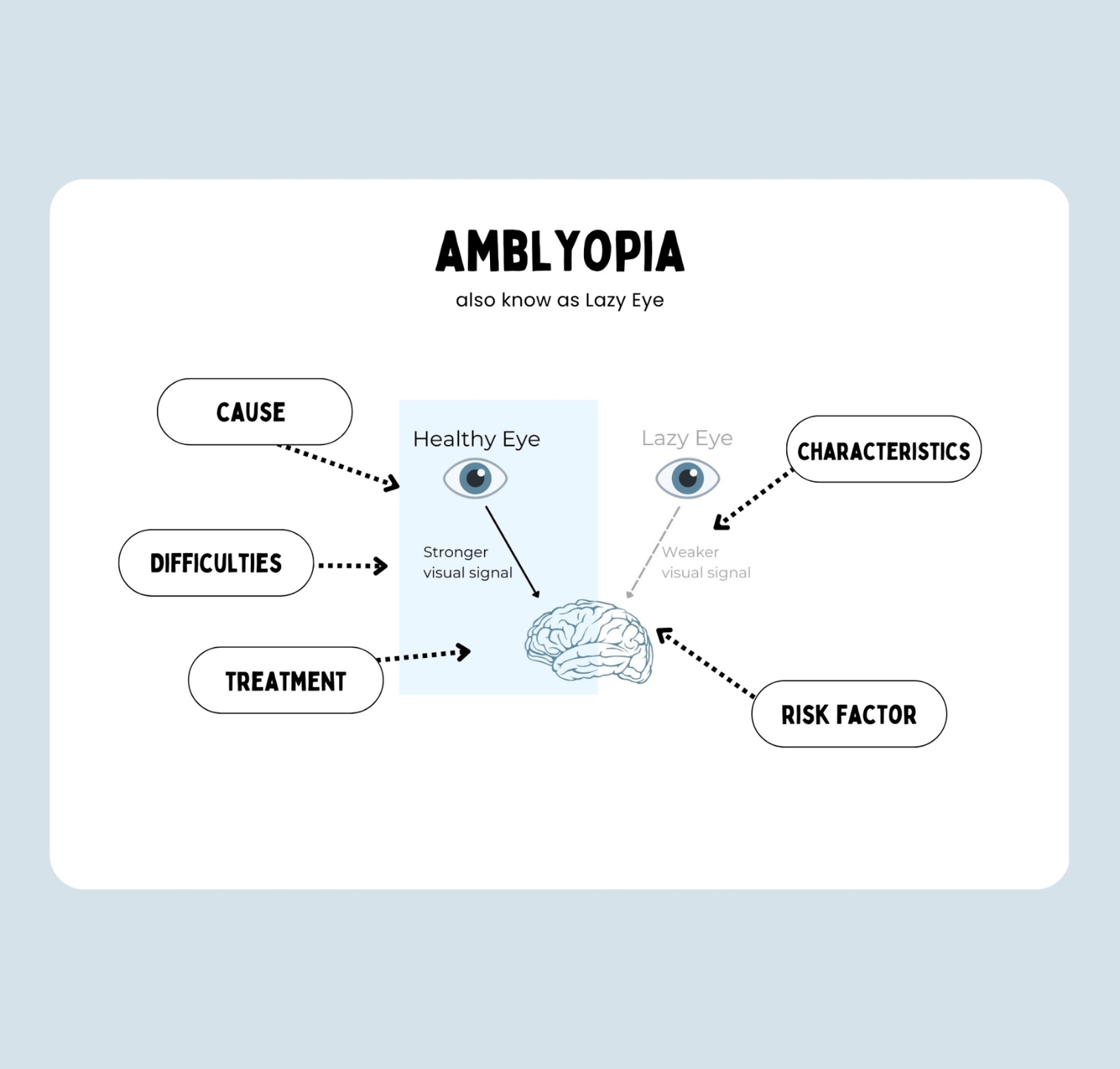
Amblyopia (commonly known as lazy eye) is a condition characterized by reduced visual acuity that is not caused by any clinically detectable abnormality in the visual pathway. It refers to a partial, potentially reversible loss of visionin one or both eyes, without any organic disease of intraocular structures such as the ocular media, retina, or visual pathways.
It occurs due to temporary active cortical inhibition of the image formed on the retina of the suppressed eye, while the other eye is able to fixate and form a clear image. In simple terms, amblyopia results from inadequate stimulation of the visual system during the critical period of visual development in early childhood (usually before 6 years of age), when certain amblyogenic factors disrupt normal vision development.
Amblyopia is one of the most important causes of vision impairment worldwide, especially in children. Although prevalence varies across regions, a study published in July 2018 reported that approximately 162–188 per 10,000 people, including children, are affected.
During the critical period of visual development, the visual pathway continues to mature as the brain learns to interpret signals from the eyes. The following factors can disrupt visual signals and lead to amblyopia, either in one eye or both:
There is no visual stimulus reaching the retina because light entering the eye is obstructed. Causes include:
Congenital cataract
Traumatic cataract
Complete ptosis
Dense corneal opacity
In this condition, the retina receives a blurred or defocused image due to refractive errors, especially in anisometropia(unequal refractive power between the two eyes).
Amblyopia occurs more commonly in anisohypermetropia than in anisomyopia.
This occurs when non-fusible images fall on each fovea, such as in strabismus (squint).
Strabismic amblyopia results from prolonged suppression of one eye when a constant unilateral squint is present.
Reduced visual acuity (recognition acuity affected more than resolution acuity)
Blurred or double vision
Crowding phenomenon: Vision is worse when tested with multiple letters than with a single optotype
Colour vision usually normal, but may be affected in severe amblyopia (vision worse than 6/36)
Eye deviation (inward or outward turning)
Poor coordination between the eyes
Reduced depth perception
Poor hand-eye coordination
Reduced sports performance
Difficulty navigating steps
Problems with driving skills
Difficulty with crafts and fine tasks
Squinting or closing one eye
Head tilting
Simultanagnosia
Reduced motion perception
Decreased contrast sensitivity
Factors that increase the risk of amblyopia include:
Premature birth
Low birth weight
Family history of lazy eye
Developmental disabilities
Normally, each eye sends identical, focused, and fusible images to the brain. When the images differ significantly, the brain suppresses the poorer image and relies only on the stronger eye.
Over time, the suppressed eye becomes weaker due to lack of use, eventually leading to the condition known as lazy eye.
Yes. Neuroscience shows that the brain has the ability to change (neuroplasticity) at any age, so amblyopia can be treated at any stage. However, early treatment gives the best results.
Treatment options include:
Used to correct:
Anisometropia
High astigmatism
Bilateral high refractive errors
The stronger eye is covered to stimulate the weaker eye.
Goals:
Equalize visual acuity
Achieve optimal vision
Promote central fixation
Used when patching is ineffective or not tolerated.
Atropine drops blur the better eye to encourage use of the weaker eye.
Blurring the better eye using over-plus lenses.
Previously used methods to re-establish foveal fixation using after-images and special visual stimuli.
Special software-based exercises may be used as a supplement to occlusion therapy.
Yes, if left untreated. The brain continues to suppress the image from the amblyopic eye, leading to progressive weakening. Eventually, the condition stabilizes, but treatment becomes much more difficult.
Yes. Early detection and timely treatment can prevent amblyopia. Correcting unequal refractive errors early significantly reduces the risk.
No. An amblyopic eye is not blind — it can see images, but not clearly. Central vision is mostly affected, while peripheral vision is usually preserved.
However, untreated amblyopia can lead to permanent vision loss.
Permanent vision loss in the affected eye
Increased risk of vision loss in the better eye
Difficulties in schooling, career choices, sports, and daily tasks
Impaired motor coordination and depth perception
Foods That Help Strengthen Your EyesightMany people know that a balanced diet supports digestion and...
Glasses or Contact Lenses — Which Should You Choose?After visiting an eye clinic, you may...
Eye Twitching – Causes, Symptoms, and TreatmentMany cultures have different beliefs about eye twitching. Some...



Comments (0)